miauu написа: ↑11 Ное 2016, 13:58
Ще ми бъде интересно да прочета отговорът ти. И Цюндел уж използва само факти, ама нямам възможност да проверявам какво било писано в еди кой си Алманах, вестник и т.н. от преди 60-80 години.
Proving that something existed that tends to be so heinous, that one has a hard time even pondering, let alone acknowledging its existence is to me, no simple matter. Why? well, because the size and scope of the crime is so large that the brain can't process the information in a cohesive way.
That said, the "data elements" that the Holocaust happened are numerous - but let's use "hard data" and numbers. That's the best way to get to the proof. Circumstantial evidence, which is always hard to follow, is not always the best way to communicate to someone who may be a denier. Data just is -- and numbers don't lie.
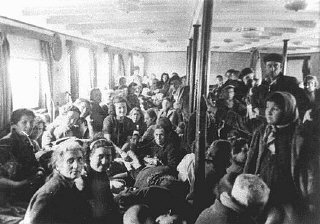
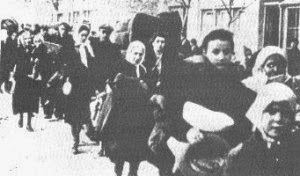
1) Population. There were about 9.4 million Jews in the territories controlled directly or indirectly by the Nazis. The Jewish population prewar Europe was well documented and cataloged. Most Jews resided in Eastern European cities in mainly Poland and parts of the western Soviet Union. Much of these censuses were destroyed during the war, so it was hard to go back and say "ok, who lived and who died" and this is one area that many holocaust deniers start with, in that they claim many merely migrated south into the Jewish state or immigrated to other parts of Europe and were lost. However, an attempt was made to "connect the dots" and there are many articles about be post war "Jewish census" attempts and the results that were tallied and it was pretty conclusive that in upwards of 4m Jewish families were unaccounted for and had no known location. Vanished. Well, not so much vanished, killed.
Early post war calculations range from 5.1 million (Professor Raul Hilberg) to 5.95 million (Jacob Leschinsky). More recent census research, by Professor Yisrael Gutman and Dr. Robert Rozett in the Encyclopedia of the Holocaust, estimates the Jewish losses at 5.59-5.86 million.
Here is a good table of pre- and post-war European Jewry.

2) Hungary's jewry evacuation to Auschwitz records survived the war, and they accounted for over 435,000 jews evacuated in three months of 1944. These were matched up with records following the war and only 5,891 lived post-Auschwitz. We can conclude here to, that they didn't vanish either, that they were eventually killed by gassing at Auschwitz. Online.
3) Eyewitness accounts of survivors who kept records of "missing" family members and friends. These were matched up to post war records to further try to identify those who were killed. There are numerous websites dedicated to this process, I include one below. Just google "children of holocaust survivors or victims."
4) Nazi eyewitness participants, who provides reference material and records of deportations and "evacuations" post war, again, matches up to records of "missing" Jewish families. The guards post war were rather interested in saving their hides, hence many low level soldiers talked to post war investigations. Plenty of testimonies available here online, reading the Nuremberg trials will give anyone pause.
5) Nazi post war records. These were numerous and showed all the "evacuations" and their destinations. These did survive the war. Although the Nazi's never used the word "exterminate" or "kill," it's pretty clear from the data that "people went in" and "never came out". The amount of record keeping by the Nazi's is astonishing -- it's inconceivable to me that these survived, but they did survive. You can find these online and read to your hearts content the banality of evil for yourself.
Most holocaust deniers don't claim that the killing didn't happen, most of them only question the numbers killed. They feel that what was recorded at over 10-12m people killed in the camps was impossible based on the ability of those camps to kill people and that there were not as many death camps as claimed. I've seen some numbers as low as only "65,000" people killed and these are just asinine.
The main proof will always be the legacy of Jewish hate the Nazis exhibited and implemented. Here one can trace the killing to its roots and go from there. But if one wanted hard data, they only need to research the population shifts, numbers and changes and correlate those numbers to the killing. It becomes pretty clear that there is a rather large hole in "where people went" and "why they never returned. "
Another claim by deniers is that "they went elsewhere" because of the changes post war in the Soviet Union and Poland and that they didn't want to return to the traditional Jewish centers there because of communism. Hogwash, if that's the case, then we would see huge increases of Jewish populations in countries such as England and the United States, and there was never a marked increase here after the war, marginal at best.
The Einsatzgruppen (Einsatzgruppen der Sicherheitspolizei und des SD) were the SS death squads. Their job "... was the annihilation of the Jews, Gypsies, and Soviet political commissars" according to General Erich von dem Bach-Zelewski.
These people considered the cleansing of towns as a sport, winning meant getting every single last Jew. If you have seen Inglorious Bastards, then these people were the real life version of Colonel Hans Landa and his subordinates.
When you're engaged in a sport, you of course need to keep score. The Einsatzgruppen kept reports. The most notorious report is the Jäger Report
Source: File:Bundesarchiv Bild 183-B0716-0005-007, Oberstes Gericht, Globke-Prozess, Beweisstück.jpg
1. Written documents--Orders for Zyklon-B gas, blueprints and orders for building materials for the crematoria, etc.
2. Eyewitness testimony--Sonderkommando diaries, confessions of guards and commandants, etc.
3. Photographs--Not only of the camps, but especially interesting are the secret photos taken of the burning of bodies that were smuggled out of Auschwitz.
4. The camps themselves--forensic tests have now been conducted demonstrating the homicidal use of both the gas chambers and the crematoria for the express purpose of exterminating large numbers of prisoners (Pressac, 1989; Pressac and Van Pelt, 1994).
5. Negative evidence--we have documentation of the numbers of prisoners shipped to the various camps, the numbers that were transferred, and the number liberated. The difference between the latter with the former two figures gives an approximation of the numbers who died or were killed (see Hilberg, 1961).
Once these historical data have been linked together the burden of proof is on the revisionists to disentangle them, both individually and as a whole.
To corroborate these photos we have eyewitness accounts. Judith Berg, the survivor who spent seven months in Auschwitz and who appeared with me on Donahue, confirmed the mass burning of bodies. Edith Gleick, also on the show, gave me a verbal description of the sorting and separation process that happened at the Auschwitz train platform that very nicely matches the photos of the Hungarian Jews presented above. And we have thousands of accounts like these.
Revisionists will ask how I can believe Berg after her claim about seeing them make soap out of human bodies. My answer is twofold: (1) we do not accept eyewitness accounts by themselves as proof of the Holocaust or gas chamber story, without corroboration from other eyewitnesses as well as physical evidence; (2) in this particular case, Berg was enraged at Bradley Smith for denying what she knows happened to her own family members and friends, and struck out at him with this statement when he also challenged the soap story. Despite the differences in specifics of accounts, there is a core of truth at their center, and the gassing and cremating of prisoners is one of the most important cores.
And, of course, we do not just have survivor accounts. We also have the confessions of guards, like SS-Unterscharfuehrer Pery Broad, captured on May 6, 1945, by the British in their zone of occupation. Broad began work at Auschwitz in 1942 in the "Political Section," and stayed there until the liberation of the camp in January, 1945. During his capture he worked as an interpreter for the British and in the process wrote a memoir, which was passed on to the British Intelligence Service in July, 1945. That December he declared under oath that what he wrote was true. On September 29, 1947, the document was translated into English and used at the Nuremberg Trials regarding the gas chambers as mechanisms of mass murder. Later that year he was released. In April, 1959, Broad was called to testify in a trial on the SS of Auschwitz, and he acknowledged the authorship of the memoir, confirmed its validity, and retracted nothing.
The reason for this lengthy background to Broad's memoir is that the revisionists dismiss all Nazi confessions as being coerced, or made up for bizarre psychological reasons. Broad was never tortured and he had absolutely nothing to gain and everything to lose by confessing. When given the opportunity to recant, which he certainly could have in the later trial, he did not. Instead, he described in detail the gassing procedure, including the use of Zyklon-B, the early gassing experiments in Block 11 of Auschwitz, the temporary chambers set up in the two abandoned farms at Birkenau (Auschwitz II), which he correctly called by their jargon name of "Bunkers I and II." He also recalled the construction of Kremas I, II, III, and IV at Birkenau, accurately depicting (by comparison with blueprints) the design of the undressing room, gas chamber, and crematorium. And then he described the actual process of gassing in gruesome detail (Shapiro, 1990):
The disinfectors are at work . . . with an iron rod and hammer they open a couple of harmless looking tin boxes, the directions read Cyclon [sic] vermin destroyer, Warning, Poisonous. The boxes are filled with small pellets which look like blue peas. As soon as the box is opened the contents are shaken out through an aperture in the roof. Then another box is emptied in the next aperture, and so on. After about two minutes the shrieks die down and change to a low moaning. Most of the men have already lost consciousness. After a further two minutes . . . it is all over. Deadly quiet reigns. . . . The corpses are piled together, their mouths stretched open . . . . It is difficult to heave the interlaced corpses out of the chamber as the gas is stiffening all their limbs.
Revisionists point out that Broad's four minutes for the total process is at odds with the statements of others such as the commandant Hoess, who claim it was more like 20 minutes. Because of these minor discrepancies, revisionists dismiss the account entirely (Cole, 1994). But this is an inappropriate use of historical data. A dozen different accounts give a dozen different figures for time of death by gassing. Does the fact that their times are not perfectly matched mean that people were not actually gassed at all? Of course not. In fact, the gassing process would take different lengths of time due to any number of conditions, including the temperature (Zyklon-B dispersal depends on the air temperature), number of people in the room, the size of the room, and the amount of gas poured into the room; not to mention the psychological differences in time perception by different observers. If the estimation of times were exactly the same, in fact, we would have to be suspicious that they were all taking their story from a single account.
Revisionists make a similar argument about the confession of SS- Obersturmbannfuehrer Rudolf Hoess, Commandant of Auschwitz from May 20, 1940 to November 11, 1943. Hoess made his statement on April 5, 1946, completely unaware of Pery Broad's memoir (and vice versa). Further, the Nuremberg Tribunal, when trying Hoess, were also unaware of the Broad document. This is important because even if revisionists completely discount the Hoess testimony, which they do (Cole, 1994, Weber, 1994b), they still have the problem of explaining why the two accounts coincide so well. Hoess talks about the temporary gassing experiments at Auschwitz I, the two "Bunkers" at Birkenau, the construction of the four large structures at Birkenau that included undressing rooms, gas chambers, and crematoria, just like Broad.
Further, after Hoess was found guilty and sentenced to death, he wrote a 250-page autobiographical manuscript that corroborates both his previous testimony and Broad's statement. On the gassing procedure, for example, compare Hoess's account with Broad's above (Hoess, 1959, p. 166):
Then, very quickly, the door was hermetically sealed, and a can of gas was immediately thrown onto the floor, through an opening connected to an air duct in the ceiling of the gas chamber, by the disinfectors, who were standing ready. This led to the immediate release of the gas. Through the peephole one could see that those who were near the air duct died immediately. It can be said that about a third died within a moment's notice. The others began to struggle, to scream, to choke. But very quickly the cries became death rattles, and, after a few minutes, all were on the ground. After a maximum of twenty minutes, nobody moved.
Broad and Hoess never saw each other before Hoess's capture on March 11, 1946 (10 months after Broad). But even if one wanted to fantasize a secret meeting between the two before Broad was captured, why would they confabulate a story that would surely convict them? There is no way to rationalize this convergence of evidence. (See Klarsfeld, 1978, for details on these and many other eyewitness accounts, as well as Teresa Swiebocka's Auschwitz: A History in Photographs.)
As for David Cole's research on the gas chambers, among his "38 Most Important Unanswered Questions" (unpublished manuscript) are, with answers:
At Mauthausen, the gas chamber has no locks on the doors, no holes or fittings where locks may once have been. The doors can be opened from inside or outside. How could you kill people in here? Wouldn't they storm the door and push it open?
According to the newly published Nazi Mass Murder (Kogon, et al, 1993), this gas chamber was in the cellar of a prison bunker, near the crematoria, with no windows and two doors that "could be hermetically sealed." Gas was piped in from an adjacent room called the gas cell through an enameled pipe "which had a slot in it about a meter long on the side nearest the wall (in other words, on the side invisible from the room). The remains of this gassing facility can still be seen today" (p. 177). If the doors can be hermetically sealed they can also be locked.
Cole also filmed at Majdanek:
Gas chamber 1 has two doors, both of which open in. Wouldn't the bodies be pressed up against the doors as described by eyewitnesses? And it has no locks either. There are no holes or fittings where a lock might have been. Also, it has a plate glass window with no holes or fittings around the window where bars or any other kind of cover might once have been. In gas chamber 2, there is a Zyklon-B induction hole in the ceiling, but no Zyklon-B traces or blue stains; in gas chamber 3 there is heavy floor-to-ceiling Zyklon-B traces and stains, but no induction holes, or signs of holes having ever been there. Also, the door latches from the inside and outside, and the hemispherical grids on the doors to chambers 2, 3, and 4 are attached to the peepholes on the outside of the doors. What would prevent the victims from breaking the glass?
Kogon, et al, admit that "records concerning these facilities were either not made in a systematic way or have not been preserved." But they do explain that in the beginning at Majdanek "two gas chambers were installed in a wooden barrack, then a brick building was put into service. The two temporary chambers were later used as drying rooms." Plans from the Berlin firm, Auert, still exist for "the iron doors with their rubber packing [that] could be securely bolted." If Cole was observing the original wooden barracks, they were obviously modified later for different use, which could explain the window and lack of locks. As for the other chambers, carbon monoxide was also used, which might account for the lack of Zyklon-B traces and blue stains in chamber 2. According to the court documents, Zyklon-B was "emptied directly into the chambers through funnels set into the ceiling, or else by the machines that produced the hot air necessary to release the gas, especially when the weather was cold" (p. 175). This could explain the traces and staining in chamber 3 that has no induction hole--the gas was not introduced through the ceiling.
Cole has many other points that will be addressed in a book-length version of this essay. Cole's fallacy of thinking in general, however, is to assume that the gas chamber account rests on these details alone. It does not. Kogon, et al, for example, include dozens of eyewitness accounts that reinforce the physical evidence for each of the camps. When one has overwhelming evidence from many different sources about mass homicides at a death camp, one may not notice what kind of door handle is on one gas chamber. Unless, of course, one goes there in search of problems in order to support a particular thesis, which is what I believe Cole has done--consciously or unconsciously.
As for the crematoria, Pressac's new work on the subject has been condensed and edited by Robert-Jan Van Pelt and Michael Berenbaum into a chapter for a soon-to-be released book on the Anatomy of the Auschwitz Death Camp (1994). What is most striking about Pressac's work is the documentation of the evolutionary process of improving the crematoria, and all the problems the Nazis had along the way. Failures were far more common than successes. The Nazis, however, were a tenacious bunch and they worked diligently to make improvements. In 1939 the crematoria at Dachau could only handle two corpses an hour. An improved version later that year increased it to 70 per day at Auschwitz, before they were even conducting mass murders. By 1941, Auschwitz had five furnaces of three crucibles each, linked to a common smokestack. This works out, theoretically, to 1,440 bodies per 24 hour period, or 532,000 per year. The capability of the crematoria to dispose of over a million bodies at Auschwitz in the course of several years was certainly there. The realities of the process, however, which takes quite a toll on the machinery, were quite another thing. In short, the Nazis had a terrible time disposing of the bodies they were gassing. The crematoria were constantly breaking down. This is why we have so many reports (and a photograph) of the mass burnings of bodies in open pits and fields--yet another convergence of evidence.
Следващият източник е буквално цяла книга, пълна с множествени документи / снимки, невъзможно е да бъде вместено в пост, затова давам линк към нея (може да се чете онлайн)
https://books.google.bg/books?id=83dvJx ... of&f=false

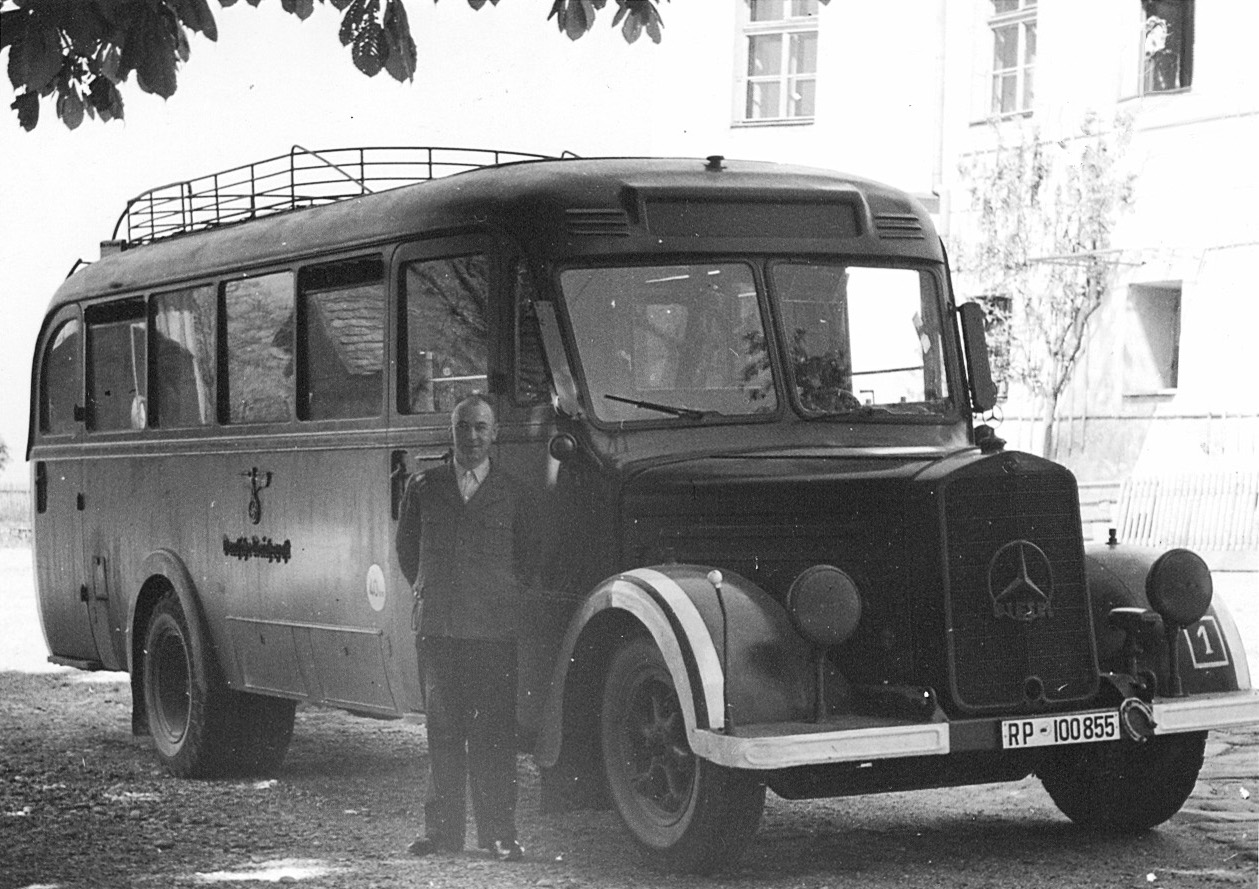


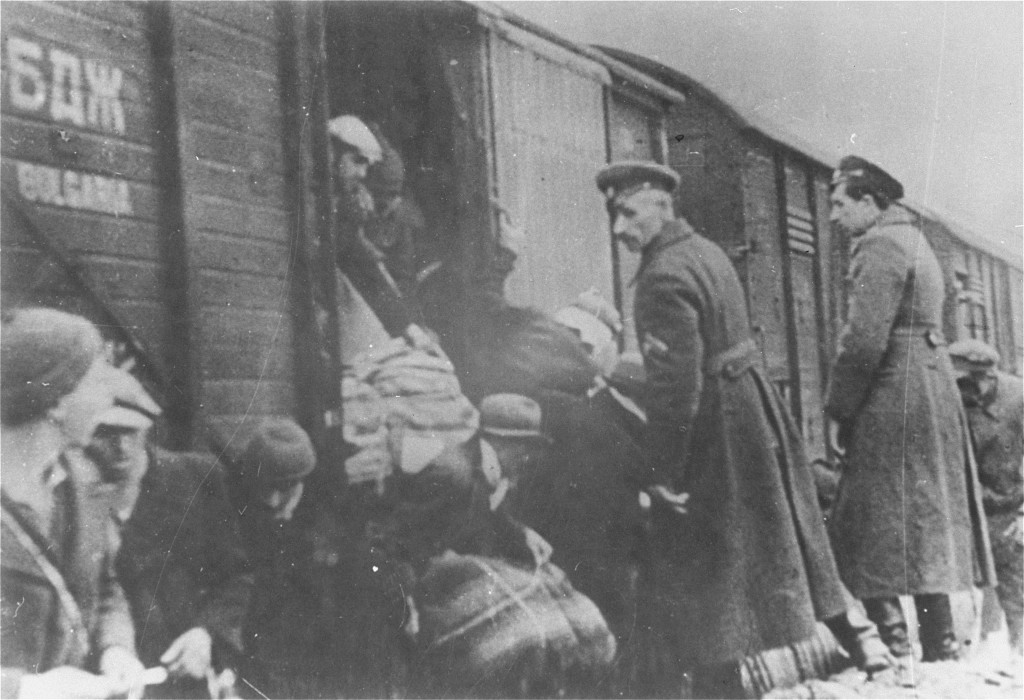

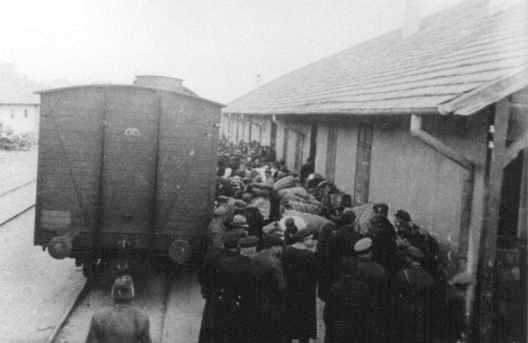



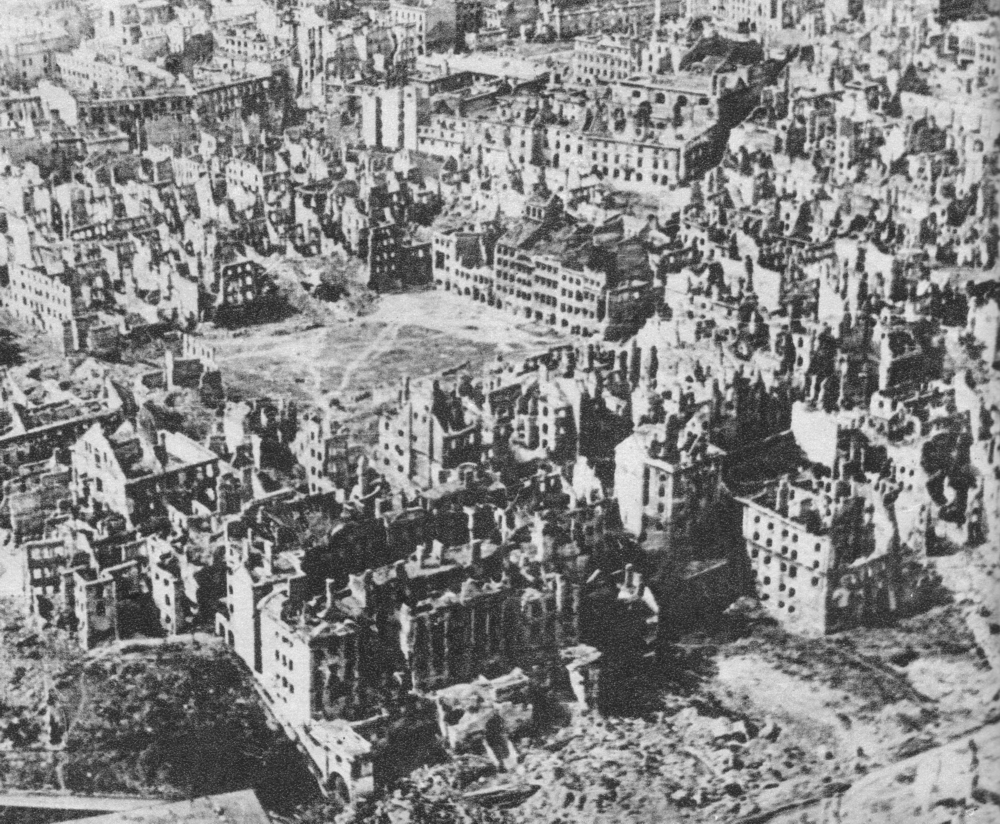


 И Хитлер и Гьоринг са знаели за него, както и всички във висшия естаблишмънт на НСДАП и държавното ръководство, което само показва двойните стандарти в системата.